Pilot Stage
During this phase, I will refine the field trip design, feedback methods, and Social Stories with the help of the autistic community in both Leicester and remotely online. The pilot will include two focus group sessions conducted one-on-one via video or phone calls to minimize group influence and social anxiety. Participants will receive a Participant Information Sheet (PIS), the materials to be reviewed, and corresponding feedback questions before their session to prepare.
Focus Group Themes:
- Session 1: Review and feedback on drafts of the Participant’s Journey and Social Story for the field trip experience at the Natural History Museum.
- Session 2: Review and feedback on drafts of the Participant’s Journey and and Social Stories for the MBD VR experiences at the Innovation Hub, UoL.
Field Trip & VR Trial Testing Session
Once the final versions of the Participants Journeys and Social Stories have been approved by both the focus group and the University of Leicester ethics committee, trial testing sessions of both the VR experiences and field trips will take place with members of the focus group. Any changes to procedures will be resubmitted for ethics approval prior to official fieldwork.
Fieldwork
Field Trips:
- Location: Natural History Museum, London.
- Process: Participants will partake in the mixed reality experience accompanied by the researcher in a one-hour session. Before their visit, participants will receive a welcome email with participation details, accessibility information, and a ‘Social Story’ of the museum. They can schedule a call with me for any questions or accessibility concerns ahead of time.
- Data Collection: I will observe participants and engage with them through open-ended questions during the visit. Verbal feedback and behavioural observations will be recorded. Participants will not be asked for feedback at the end of a session but will be given time to digest and reflect before submitting their feedback in their chosen format.
VR Experiences:
- Location: Innovation Hub, University of Leicester.
- Process: Participants will book their time slots and receive similar preliminary materials as for the field trips. They will experience up to three VR activities during a 30-minute session.
- Data Collection: In the same manner as the field trips.
Feedback Gathering
Participants will receive feedback questions via email after their sessions and can choose to respond through phone, video call, or written format.
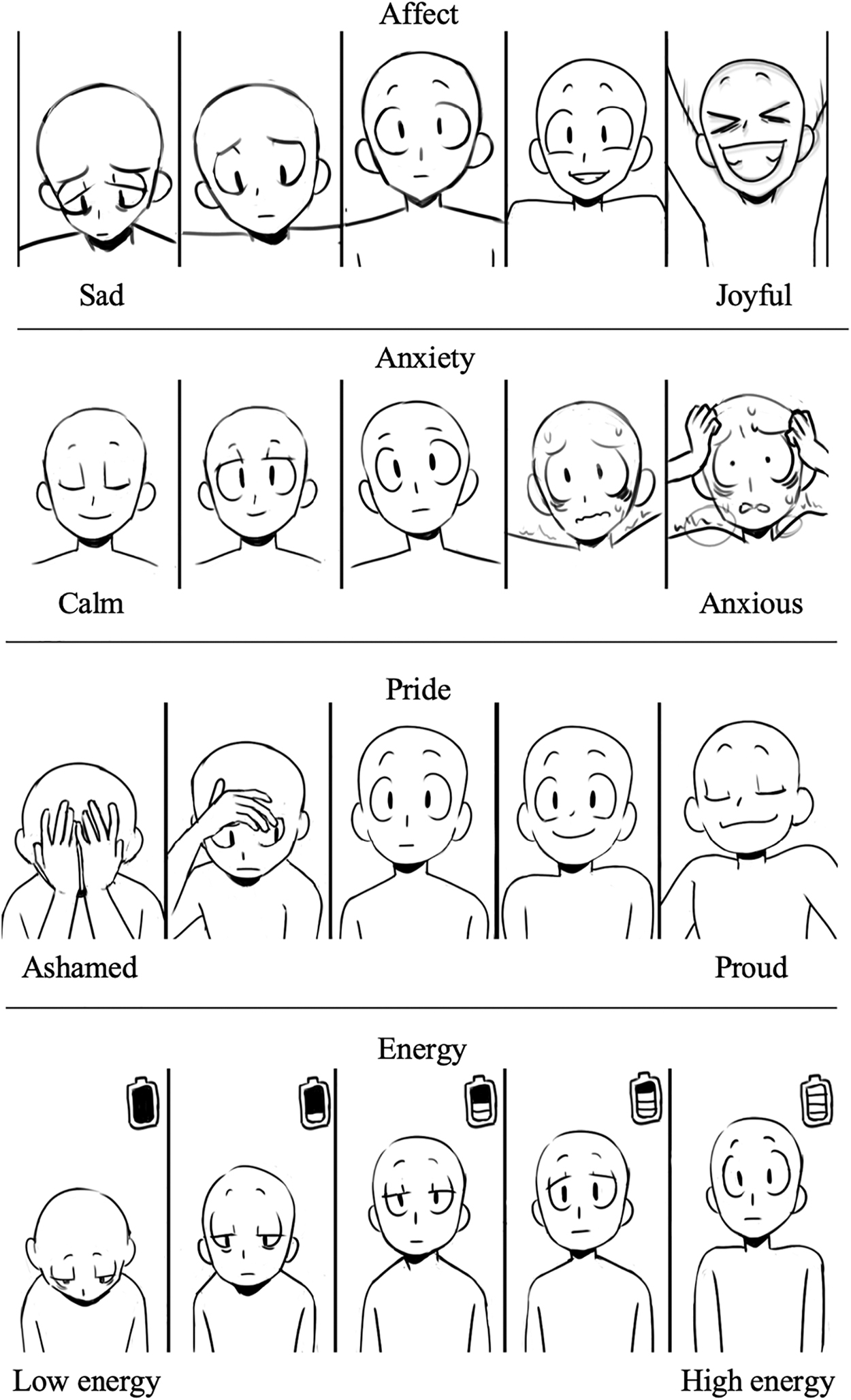
I will use the co-created questionnaires from the focus groups and will employ the ‘Multidimensional Visual Scale Assessing Affect, Anxiety, Pride, and Energy (AAPE)’ (Niccio et. al, 2020), developed specifically by and for neurodivergent individuals, to capture emotional responses.
Data Analysis
I will analyse fieldwork and feedback data using qualitative and quantitative methods. Themes will be identified using software like Nvivo, focusing on the features of digital experiences that are most or least well-received. Emotional responses will be assessed using the AAPE scale, with attention to individual variations and intersectional experiences. Quantitative Comparative Analysis will be used to discern any correlations between the level of Interactive Cultural Heritage (ICH) feature rates and quantified participant emotional responses.
Outputs and Artefacts
- Build Guidelines
Development of Autistic Digital Design guidelines based on data analysis. - Design Autism Training
Creation of Autism/Neurodiversity training for partners, in collaboration with the Neurodiverse Museum. - Deliver Autism Training
Implementation of Autism/Neurodiversity training alongside delivery of the guidelines, aiming to foster a permanent culture of accessibility in partner organisations.
 SHELBY NAVONE